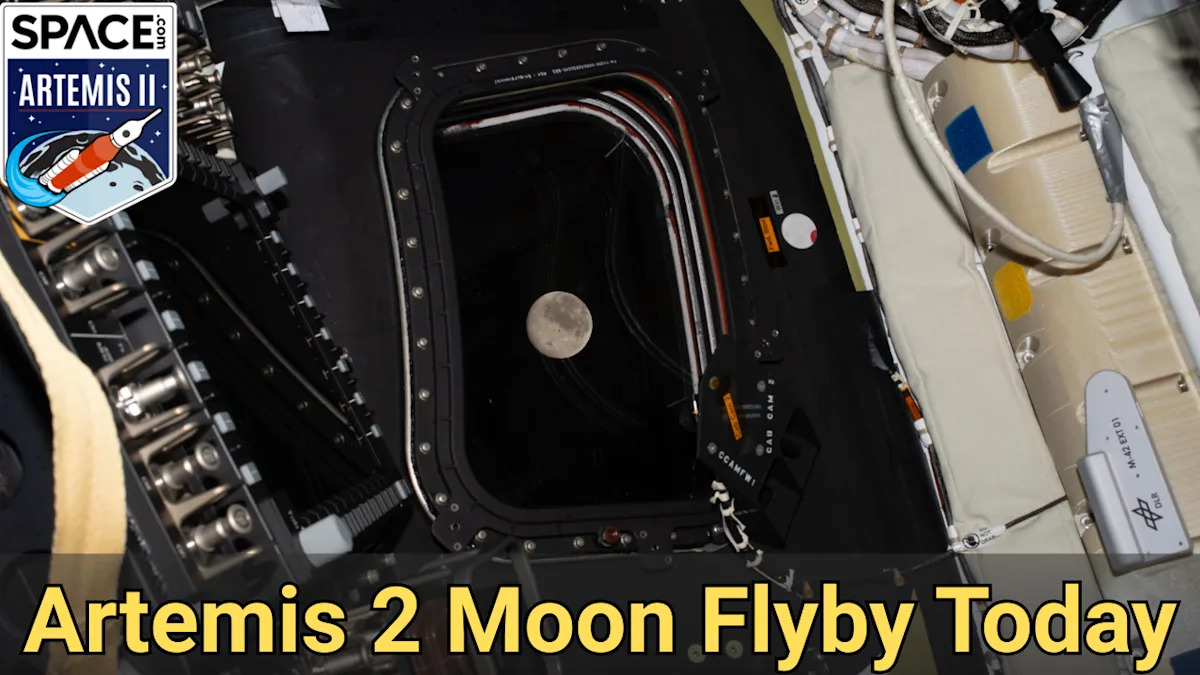
Artemis II & Dr. Kelsey Young: Guiding NASA's Return to the Moon
Humanity stands on the precipice of a new era of lunar exploration, spearheaded by NASA's ambitious Artemis program. At the heart of this groundbreaking endeavor is a dedicated team of scientists and engineers, with figures like **Dr. Kelsey Young Nasa** playing a pivotal role. Dr. Young, as the Artemis Science Flight Operations Lead, is instrumental in ensuring that every step of NASA's journey back to the Moon is not only safe and successful but also maximizes scientific discovery. From preparing astronauts for their first steps on the lunar surface in over half a century to guiding the historic Artemis II crew around the Moon, her expertise bridges the intricate gap between scientific objectives and operational realities.
The Artemis program represents NASA's commitment to returning humans to the Moon, establishing a sustainable presence, and paving the way for future missions to Mars. While Artemis I proved the capabilities of the Space Launch System rocket and the Orion spacecraft in an uncrewed flight, Artemis II marks the critical next step: the first crewed mission to journey around the Moon in more than 50 years. Simultaneously, rigorous simulations like JETT5 are laying the groundwork for Artemis III, which will see astronauts land near the lunar South Pole. Dr. Young's contributions are central to the success of both missions, shaping how science is conducted, how astronauts are trained, and how mission control guides humanity's boldest ventures yet.
Dr. Kelsey Young: A Guiding Force in Lunar Exploration
As the Artemis Science Flight Operations Lead, **Dr. Kelsey Young Nasa** stands at the nexus of scientific aspiration and operational execution. Based at NASA's Goddard Space Flight Center in Greenbelt, Maryland, her role is multifaceted and deeply critical to the success of the Artemis missions. She is responsible for integrating the scientific goals of lunar exploration with the complex flight operations required to achieve them. This involves working closely with scientists, engineers, and astronauts to develop strategies for lunar surface exploration, sample collection, and data acquisition.
Imagine the immense challenge: envisioning how astronauts, clad in bulky spacesuits, will perform intricate geological surveys or deploy sensitive scientific instruments on a distant, alien landscape. Dr. Young's team translates these scientific desires into practical, actionable plans. They consider everything from the choreography of astronaut movements within the Orion capsule to the precise timing of scientific observations during lunar orbit and surface excursions. Her leadership ensures that the valuable time astronauts spend away from Earth yields the maximum possible scientific return, positioning NASA at the forefront of lunar discovery. It's a role that demands not only profound scientific understanding but also exceptional communication and problem-solving skills, making her an indispensable asset to the Artemis program.
Artemis II: Humanity's Return to Lunar Orbit
The successful launch of Artemis II from the Kennedy Space Center will mark a historic moment: humanity's first return to the vicinity of the Moon in over five decades. This monumental mission will send a crew of four astronauts aboard the Orion capsule on a meticulously planned journey around the Moon and back to Earth. The primary objective of Artemis II is to test Orion's systems with a crew onboard, demonstrating its capabilities for deep-space human exploration before the pivotal Artemis III lunar landing.
The experience for the crew aboard Orion will be one of profound significance, albeit within surprisingly confined quarters. **Dr. Kelsey Young Nasa** has expressed admiration for the astronauts' ability to operate within such a compact space for the estimated ten-day mission. Having personally toured the Orion capsule's mockup multiple times, she understands the physical and logistical challenges. The vehicle, while cutting-edge, is a tight fit for four "quite large humans," as she humorously noted. This requires careful consideration of human factors, from how crew members will manage personal space and perform tasks to how they will observe the breathtaking views of Earth and the Moon through their windows. NASA's rigorous training includes simulations where astronauts practice their movements and observations within the mockup, even using inflatable moon globes to simulate views, ensuring that every moment of this incredible voyage is optimized for both mission objectives and crew well-being. The Artemis II mission will not only collect vital data for future deep-space travel but also rekindle humanity's direct connection to the Moon, paving the way for a sustained lunar presence.
Simulating the Future: JETT5 and Artemis III Preparation
While Artemis II prepares for its orbital journey, NASA's forward-thinking approach means preparations for the crewed lunar landing mission, Artemis III, are already in full swing. A cornerstone of this preparation is the Joint Extravehicular Activity and Human Surface Mobility Program Test Team Field Test #5 (JETT5). This critical simulation, conducted near Flagstaff, Arizona, in the San Francisco Volcanic Field – an area chosen for its geological resemblance to lunar terrain – provided the most high-fidelity moonwalk simulation to date for the Artemis program.
During JETT5, astronauts performed a series of simulated moonwalks, practicing crucial tasks like sample collection, instrument deployment, and geological surveying. Meanwhile, flight controllers and scientists, including members of **Dr. Kelsey Young Nasa's** team, guided and provided real-time feedback from NASA's Johnson Space Center in Houston. These analog missions are indispensable for several reasons:
*
Testing Integration: JETT5 was designed to rigorously test the integration between crew members on the "lunar surface" and mission control teams. This seamless communication and collaboration are vital for successful real-world missions.
*
Operational Procedures: It allows NASA to refine operational procedures for moonwalks, from communication protocols to decision-making processes under pressure.
*
Scientific Evaluation: In the Science Evaluation Room (SER) at Johnson Space Center, lunar scientists, geologists, and experts in image analysis directed and evaluated the simulated lunar surface science. This hands-on experience allows scientists to provide immediate feedback on geological targets and sampling techniques.
*
Crew Training: Astronauts gain invaluable experience in their specialized spacesuits, learning how to move, operate tools, and conduct scientific observations in a challenging environment. This includes practicing complex tasks like analyzing the "coastline of a continent" or "high thunder clouds" if they were real lunar features.
These simulations are not merely drills; they are crucial rehearsals that identify potential challenges, refine techniques, and build the cohesive teamwork necessary for the historic Artemis III landing near the Moon's South Pole. For a deeper dive into Dr. Young's insights on these preparations, explore
Dr. Kelsey Young on NASA's Artemis III Moonwalk Prep. To understand the intricacies of these simulations, read about
Inside JETT5: Simulating Moonwalks for NASA's Artemis III.
The Scientific Frontier: Why the Lunar South Pole?
The selection of the Moon's South Pole as the primary landing region for Artemis III is driven by compelling scientific and strategic considerations. Unlike previous Apollo missions which landed near the lunar equator, the South Pole offers a dramatically different and potentially more rewarding scientific frontier.
*
Water Ice Deposits: Permanently shadowed regions within craters near the South Pole are believed to harbor significant deposits of water ice. This ice is an invaluable resource, not just for scientific study but also for future human outposts. It could be converted into drinking water, breathable oxygen, and even rocket fuel, enabling sustainable lunar exploration and serving as a springboard for missions to Mars.
*
Unique Geological Formations: The South Pole region presents ancient, untouched geological formations that could hold clues to the Moon's early history and the evolution of the inner solar system. Scientists are eager to analyze these pristine samples.
*
Illumination Conditions: Paradoxically, while some craters are permanently shadowed, other elevated areas at the South Pole receive near-constant sunlight, making them ideal locations for solar power generation for long-duration missions.
Exploring this region requires meticulous planning and rigorous training, which is precisely where the work of individuals like **Dr. Kelsey Young Nasa** becomes indispensable. Her team ensures that the scientific objectives for this unique environment are seamlessly integrated into the mission architecture, from designing exploration traverses to selecting optimal sample sites.
Conclusion
The Artemis program is more than just a return to the Moon; it's a testament to human ingenuity, collaboration, and our insatiable drive to explore. At every stage, from the rigorous simulations of JETT5 to the historic crewed journey of Artemis II, the leadership and scientific acumen of individuals like **Dr. Kelsey Young Nasa** are absolutely critical. As the Artemis Science Flight Operations Lead, she embodies the spirit of interdisciplinary cooperation that is essential for complex space missions, ensuring that scientific discovery remains at the forefront of NASA's lunar endeavors. Her work, alongside countless dedicated professionals, is paving the way for a new generation of explorers to touch the lunar surface, unlock its secrets, and inspire humanity's next great voyages among the stars. The future of space exploration is bright, and with experts like Dr. Young guiding the way, humanity's presence on the Moon and beyond is becoming an ever-closer reality.